Workshop om demokrati i lærarutdanninga i Malawi
Chancellor College i Malawi og Høgskulen i Volda har inngått eit samarbeid om å styrkje kunnskapen om demokrati i lærarutdanninga i Malawi. ”Capacity building for Deocracy in Teacher Training” er forankra i ”Theacher Ecucation Programme South – North” som er finansiert av NORAD og koordinert av Norwegian Centre for International Cooperation in Higher Education (SIU). I denne veka møttest dei involverte til workshop i Volda.
-Fokusgrupper for prosjektet er lærarutdannnarar, lærarstudentar og andre utvalde målgrupper, seier Odd Ragnar Hunnes ved Avdeling for lærarutdanning.
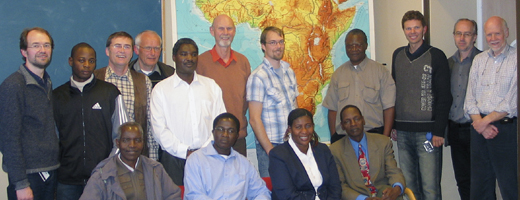
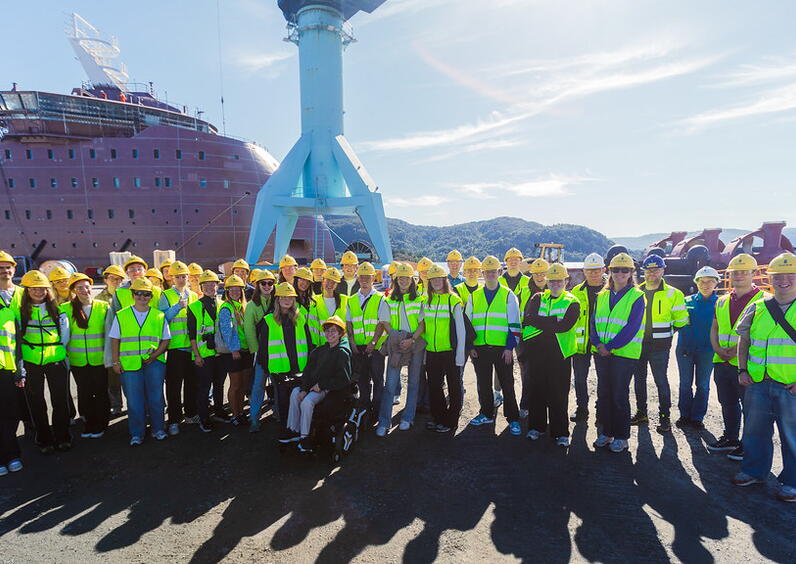
Framme frå venstre: Robert Chonzi, Foster Kholowa, Annie Chiponda og Amos Chauma.
Ståande bak frå venstre: Ralph Meier, Steve Dunga, Odd Ragnar Hunnes, Birger Løvlie, Bob Chulu, Kjell Holby, Arngeir Berge, Matthew Chilambo, Bjørn Gunnar Tafjord, Leif Sletvold og Eivind Indresøvde.
Meir informasjon om prosjektet:
CAPACITY BUILDING FOR DEMOCRACY IN TEACHER TRAINING – MALAWI AND NORWAY
A PROJECT WITHIN A PROGRAM
The project is established within the “Teacher Education Programme South – North”, which is funded by the Norwegian government (NORAD) and coordinated by the Norwegian Centre for International Cooperation in Higher Education (SIU).
MAIN GOAL OF PROJECT
- heighten the awareness of the concept of democracy
- focus groups are teacher trainers, teacher students, students/pupils and the general public in selected societies, prioritized in that order.
The main goal of this project is to heighten the awareness of the concept of democracy with its core values, attitudes and processes. Focus groups are teacher trainers, teacher students, students/pupils and the general public in selected societies, prioritized in that order. Capacity means ability to perform and engages all corners in “The Capacity Triangle”: cognition, psychodynamics and cooperation.
Democracy is young in Malawi and well rooted in Norway. Comparing and contrasting the situation in the two countries is the main approach in this project. Through reading, research and dialogue, we will define and describe the concept. The existing knowledge and processes associated with democracy will be our starting point. We will identify perceptions and traces of democracy in selected schools and societies and build further on these.
APPROACHES
- define and describe the concept
- existing knowledge and processes our starting point
- identify perceptions and traces of democracy
The project will produce various learning / teaching material to be used in teacher training in both countries, including examples of how to try out democratic procedures in schools / classrooms. There will be seminars and workshops mainly for teacher trainers at the cooperating institutions, presentations at The Education Day of Malawi, short reports, a special issue of the Malawi Journal of Development Education and outreach experiment(s) in selected Malawian society(ies).
MAIN FOCUS
- development of teaching material and didactical perspectives of democracy in teacher training
- internalize fundamental values and attitudes of democracy so that such values will be part of their identity
This project focuses mainly on the development of teaching material and didactical perspectives of democracy in teacher training. The reason for this priority is the impression that teacher training students are familiar with the lexical meaning of democracy, while the ethical and practical implications are less obvious to them. Therefore the project mainly focuses on how to present and work with democratic issues in the teacher training as such.
Our aim is to help the future teachers to internalize fundamental values and attitudes of democracy so that such values will be part of their identity. Hopefully the students then will bring this competence into their future classrooms. Furthermore, our aim is to furnish the future teachers with teaching materials as well as ideas on how to work with democracy in their future schools.
AREAS OF WORK / ACTIVITIES
Articles / papers on relevant subjects
The following papers are finished:
• Is it possible to measure Democracy?
• So what is Democracy actually about?
The following papers are in the process of being written:
• A concept of learning
• Democracy and Gender Issues in Education
• Democracy and Language
• Democracy in Malawian and Norwegian Textbooks
• Democracy in the Classroom
• Entrepreneurship and Democracy
• Participation in Democracy
• Possible Steps to secure survival of endangered vernacular
• Reconciling Democracy and Responsibility
• The Church and the Development of Democracy: to legitimate power or to be a Prophetic Voice
• The Fundamental values of Democracy and Religion
• The History of Democracy in Malawi and Norway
• The relationship between Democracy and HIV/AIDS in Malawi
• Traces of Democracy in Malawian Culture
Resource Book on Teaching about Democracy
Within the project we will make a resource book on democracy in teacher training. The book will be composed of a selection of papers / articles that are written within the project (see topics mentioned above). The selection will depend on an assessment of the relevance for the classroom. Therefore each of these articles will also have tips for how to work with the article with the students. We plan to publish the resource book towards the beginning of 2008.
A special issue of Malawi Journal of Education and Development
Chancellor College at the University of Malawi runs a periodical called Malawi Journal of Education and Development. The project has applied for permission to publish a special issue of the journal, where articles that are produced within the project may be published. The special issue will hopefully be published towards the end of 2007.
Survey on knowledge, skills, views and attitudes about democracy
We are working on a survey on knowledge, attitudes and democratic preparedness in a sample of secondary schools in Malawi. So far, we have run a study in 12 secondary schools in Zomba District in Malawi. A report from the survey is planned to be finished during the fall 2007.
The aims for our work with this survey are:
• To produce information on the state in Malawian secondary schools.
• To make possible a comparison with Norway and the international survey “Civic E educational Survey”.
• To find out if it may be feasible to perform the survey on a nation wide scale.
• To develop a method for using some core questions from the survey as a diagnostic tool for a teaching- / learning process about democracy in a group of students.
Full text last ballpoint:
The idea is to run a short version of a survey in any group of students as an introduction to the democracy topic and as part of the planning for how to work with this topic in the group. Thus we will furnish future social study teachers with a method to introduce the topic as well as to diagnose the current situation (knowledge as well as attitudes amongst the students) in the class. After running the survey, the teacher computes the data and presents the results for the students. On this background the students should be invited to have their say about the way the topic ‘democracy’ should be handled in the group, and this concerns content, approach as well as working method. Probable gains from this approach may be:
- Introduce the students to surveys, to experience the relationship between own answers and the summed up picture. Here are a multitude of possibilities to work with statistics as a tool in social studies.
- A side effect of taking part as an informant in the survey, the students will become aware of their own knowledge as well as their lack of knowledge on the topic.
- The students will learn something new about democracy during the presentation of the results from the survey.
- Establish a class-baseline for the topic ‘democracy’ and this will be an immense help in planning the work with the topic.
- Since democracy is also about participation, this approach also is democratic in the sense that the students are invited to contribute to establishing the baseline as well as contribute in the planning of how to work with this topic.
Pedagogical and social entrepreneurship
- Introduce the concept and ideas about entrepreneurship in schools as an arena for practicing democratic ways and procedures.
- Start two piloting projects in Malawi, one in a primary school and one in a secondary school.
Student politics and democracy
Two VUC-students have spent a three months stay at CC during February – April 2007. During their stay, they have worked on their project: “Student democracy at CC and VUC”. The president of the Student Council at CC is invited to visit VUC and the student council there. Both he and the Norwegian students will write a report where they will describe, compare and contrast student democracy at the cooperating universities. The aim is for the students to learn from each other and create links between CC and VUC in the fields of student politics.
WE HOPE TO
Establish a dictionary for democracy in different tribal languages in Malawi. This will certainly be a small scale operation at this stage. However, we regard this idea to be so important, that we want to find out if it may be possible to include an extension of it in a possible project after 2007.
PLANS FOR 2007
• Workshops:
- Volda May 2007
- Zomba September 2007
• Finalize papers and the Resource Book on Teaching about Democracy and the special issue of “Malawi Journal of Education and Development”.
• Continue work with student democracy (student report finished during the fall)
• Continue work with educational entrepreneurship.
• Finalize report from survey on democracy among selected secondary school students.
• Include the theme democracy into the curriculum of social studies at VUC and at CC and try it out during the fall semester of 2007
• Possibly write an application for a more substantial project to follow up the pilot.
PROJECT PARTICIPANTS
This project has the following participants:
Chancellor College:
South coordinator: Mr. Matthew Chilambo mchilambo@chanco.unima.mw
Mr. Amos Chauma, cats@chanco.unima.mw
Mr. Frank Chigeda, fmtemangombe@chanco.unima.mw
Ms. Annie Chiponda, achiponda@chanco.unima.mw
Mr. Symon Chiziwa, schiziwa@yahoo.co.uk
Mr. Robert Chonzi, cats@chanco.unima.mw
Dr. Bob Chulu, bchulu@chanco.unima.mw
Mr. Steve Dunga
Ms. Masozi Gausi, mlgausi@yahoo.com
Dr. Foster Kholowa, fkholowa@chanco.unima.mw
Dr. Samson McJessie-Mbewe, smacjessie@chanco.unima.mw
Volda University College
North coordinator: Mr. Odd Ragnar Hunnes, orh@hivolda.no
Mr. Arngeir Berge, ArngeirB@hivolda.no
Mr. Kjell Holby, Kjell.Holby@hivolda.no
Mr. Eivind Indresøvde, Eivind.Indresovde@hivolda.no
Dr. Birger Løvlie, Birger.Lovlie@hivolda.no
Dr. Ralph Meier, Ralph.Meier@hivolda.no
Mr. Leif Sletvold, LeifSl@hivolda.no
Mr. Bjørn Gunnar Tafjord, Bjorn.Tafjord@hivolda.no
ACTIVITY GROUPS
The project is working on several different activities, taken care of by the following activity groups:
Entrepreneurship group:
Mr. Bjørn Gunnar Tafjord (leader), Mr. Frank Chigeda, Mr. Steve Dunga, Dr. Foster Kholowa
History group:
Mr. Eivind Indresøvde (leader), Ms. Annie Chiponda, Dr. Birger Løvlie
Home page:
Editors: Mr. Matthew Chilambo and Mr. Odd Ragnar Hunnes
Operator: Mr. Arngeir Berge and Mr. Frank Chigeda / Mr. Steve Dunga
Language group:
Dr. Foster Kholowa (leader), Mr. Amos Chauma, Mr. Symon Chiziwa, Mr. Kjell Holby,
Religion group:
Dr. Birger Løvlie (leader), Mr. Robert Chonzi, Dr. Ralph Meier
Survey group:
Dr. Bob Chulu (leader), Mr. Frank Chigeda, Mr. Steve Dunga, Mr. Odd Ragnar Hunnes, Dr. Samson McJessie-Mbewe, Mr. Leif Sletvold
Traces of democracy in Malawian culture:
Mr.Robert Chonzi (leader) Mr. Amos Chauma, Mr. Matthew Chilambo,
CHANCELLOR COLLEGE is located in Zomba in the Southern Region of Malawi. It is the largest college of the constituent colleges of the University of Malawi. The college has five faculties, namely: Faculty of Humanities, Faculty of Science, Faculty of Law, Faculty of Social Science and Faculty of Education . Departments service each faculty as follows:
• Education: Curriculum and Teaching Studies and Educational Foundations
• Humanities: African Languages and Linguistics, Classics, English, Fine and Performing Arts, French, Language and Communication Skills, Philosophy and Theology and Religious Studies.
• Science: Biology, Chemistry, Geography and Earth Sciences, Home Economics, Physics, Mathematical Sciences.
• Social Science: Economics, History, Psychology, Political and Administrative studies and Sociology
• Law: Law
The college runs the following programmes:-
• Four-year degree programmes in Humanities, Public Administration, Science, Social Science, Education and Law (Honours);
• A one-year post-graduate programme leading to to the University Certificate in Education;
• One-year post-general degree programmes leading to Honours Degrees in a number of subjects;
• Full-time and part-time Masters programmes in Chemistry, Environmental science, Economics, Sociology, Philosophy, Biology and Theology and Religious Studies;
• Part-time Ph.D. programmes
VOLDA UNIVERSITY COLLEGE offers five Master’s programmes - and there are more to come - over 30 undergraduate courses - and about 300 study courses. We have four faculties covering a wide range of subjects from administration and planning, music, art and design, drama and theatre, history, culture, religion, ICT, maths, outdoor life, teacher training to media and journalism, animation, special pedagogics, social sciences and languages etc. VOLDA UNIVERSITY COLLEGE has a staff of around 250 and around 3000 students, roughly 130 international students from 30 different nations, and agreements with well over 100 partners in 40 countries all over the world. So, you can tell there is a close contact between staff and students, we have a compact campus and a lively academic and social environment. Come and see for yourself and combine learning and friends for life.
PREVIOUS AND EXISTING COOPERATION BETWEEN CHANCELLOR COLLEGE AND VOLDA UNIVERSITY COLLEGE
Activity/programme:
Fredskorpset Ung, started 2003
Chancellor College / University of Malawi (CC) and Volda University College (VUC) are partners in the project “Exchange for Development” (EfD). This project is part of the Fredskorpset – ung program and has been ongoing for about two years so far. There are three more partners in the program (one from Malawi and two from Namibia).
So far we have exchanged four students each year between our two institutions, and plan to do that again during the spring semester 2006. The students stay at partner institution for three months. The partner program has conducted three partner meetings with representatives from all partners: Volda Norway May 2003, Zomba Malawi November 2004 and Windhoek Namibia November 2005.
Memorandum of Understanding
In November 2004 the two institutions signed a “Memorandum of Understanding”. The goal of this memorandum is: “To encourage direct contact and cooperation between their [the institutions] faculty, research and administrative staff” Within the fields that are mutually acceptable, the following general forms of cooperation will be pursued:
- Staff and students for study and research
- Study abroad programs
- Student exchange programs
- Quota programs
- Visits by and interchange of staff for research, teaching and discussions
- Exchange of information including, but not limited to, exchange of library resources and research publications
- Collaborative research activities
Quota program
We have tried to include CC in the Quota Program at VUC, and there will be room for one (possibly more) quota student(s) from CC starting August 2006.