Strengthening societal trust through AI initiative in libraries
How can we build democratic resilience through public libraries? A new international project based in the county of Møre & Romsdal will try to answer this question. The project aims to examine the societal benefits of providing practical training in artificial intelligence (AI) to the general public.
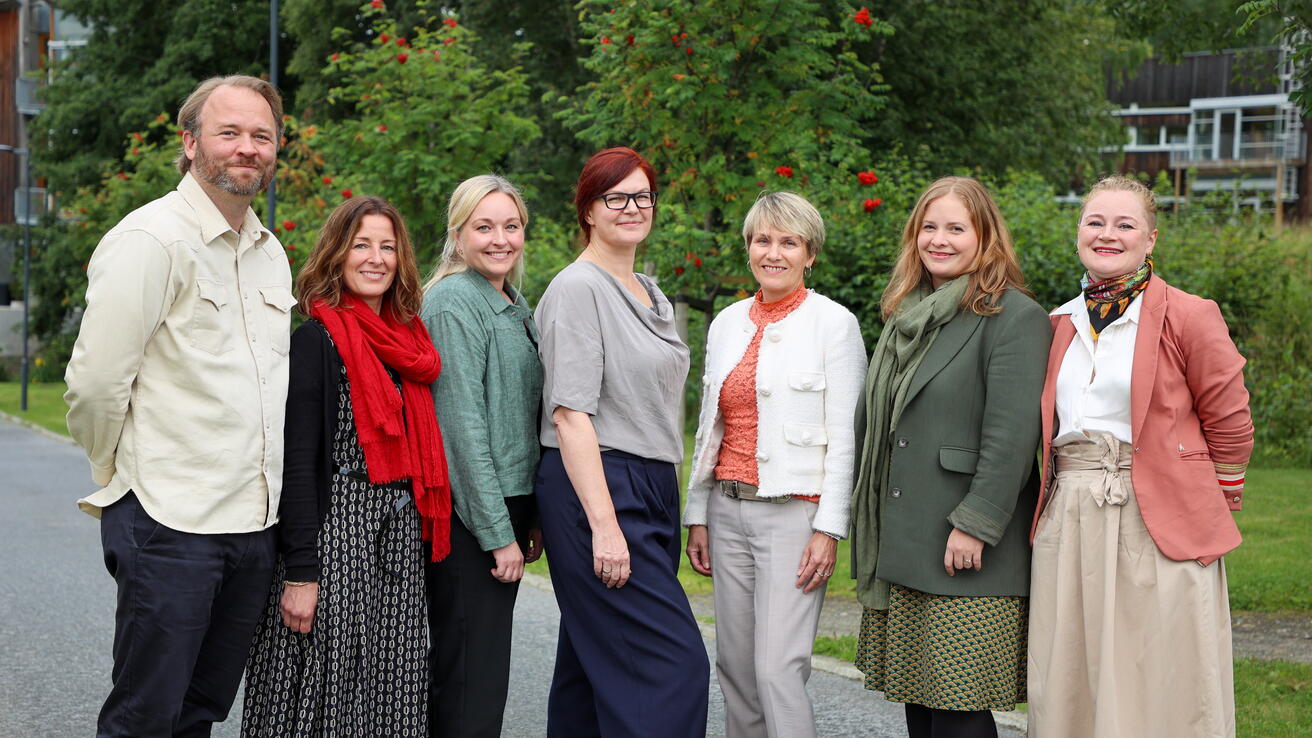
Prosjektgruppa bak «Ai trust Libraries» kan juble for europeisk millionstøtte (f.v.): HVO-professor Bjarte Folkestad, HVO-professor Nathalie Homlong, høgskulelektor Ingvild Sande Lillebø, HVO-førsteamanuensis Synnøve H. Amdam (forskingsleiar i prosjektet), HVO-professor Siv M. Gamlem, Lisa Alvestad, rådgivar for regional bibliotektutvikling i Møre og Romsdal (prosjektleiar), og fylkesbiblioteksjef Mona Iren Auganæs. Det var Auganæs og Amdam som tok initiativ til prosjektet. Foto: HVO / Steinarr Sommerset.
The Department for Libraries in the county administration of Møre og Romsdal and researchers at Volda University College (VUC) are behind the new project "AI Trust Libraries."
Together with several partners, they aim to develop knowledge and educational programs focused on democratic preparedness - the ability to critically evaluate information and participate in public debate.
The results of this three-year project, which is launched this month, are intended to benefit the general public through new services at public libraries.
The project has already made a strong start, securing NOK 4.3 million in funding from the Erasmus+ program.
Public libraries as democratic defense
“It was incredibly exciting to receive this grant! We believe we have an excellent and vital project with great benefits to society, so we are delighted to have the funding to get started,” smiles project manager Lisa Alvestad from the county library.
Alvestad and Synnøve H. Amdam - associate professor at VUC and the project’s research lead - confirm that the importance of this project has also be recognised externally: Erasmus+ awarded the project application a score of 91 out of a possible 100 points.
The full title is “AI Trust Libraries: Empowering Adults with Civic AI literacy for Democratic Trust through Learning, Dialogue and Co‑Creation in Public Libraries.” The development project places particular emphasis on practical training in artificial intelligence (AI).
This training will take place through game-based learning, democratic dialogue, and makerspaces. The project managers believe public libraries are the ideal setting for achieving precisely this.
“Despite being underfunded, libraries are becoming increasingly important in a turbulent world, and we believe the library can be strengthened as part of our democratic defense: public libraries can be used to provide people - including those outside the workforce or education system - with new knowledge about both AI and democracy,” Alvestad elaborates.
Board games, escape rooms, and dialogue
Research leader Amdam from VUC believes that an important focus on AI going forward will be to identify effective applications for the technology.
"We need to look at how we can use AI to build democratic resilience, given the prevalence of fake content and AI-generated noise. In doing so, we must also reach large segments of the population that we don't encounter within the education sector."
Amdam highlights the library's strengths as a "third space" (distinct from home and work) - a place where no prerequisites are needed to participate.
"This makes the library a venue where different kinds of conversations can take place."
She cites, for example, dialogues regarding our behavior in comment sections and how we relate to one another in a democratic society.
"This will be crucial moving forward in plans to strengthen resilience in civil society. Through this project, we therefore aim to explore how we can build competence in this area," says Amdam.
What do you envision offering people at the library?
"Concrete ideas could include board games focused on digital skills, escape rooms centered on current topics, AI creative workshops, and public dialogues - with or without AI - though we intend to explore and test these concepts further."
Project manager Alvestad adds:
"Co-creation with members of the public will also be important—that is, learning through dialogue and active, shared participation. To achieve this, we need to engage people in a hands-on way."
"Yes, rather than just 'click here,' it needs to be about understanding: What does this mean for me? What does this mean for my understanding of what it means to be a citizen?" Amdam adds.
An offer for villages and cities alike
The project emerged from a dialogue between the county of Møre & Romsdal and VUC. Professional networks that VUC is part of, the national AI centers, AI TRUST and AI LEARN, have also been brought into the project as key resources.
Public libraries in three counties (Møre & Romsdal, Vestland, and Rogaland) - as well as libraries in Hungary, Finland, and France - are also participating as partners. Among other things, they will pilot the training programs in practice.
"The research-based offerings we are developing will reach citizens everywhere from rural communities in Norway to Paris - ranging from small libraries with part-time staffing to national libraries with hundreds of employees - and will be relevant to everyone," Alvestad points out.
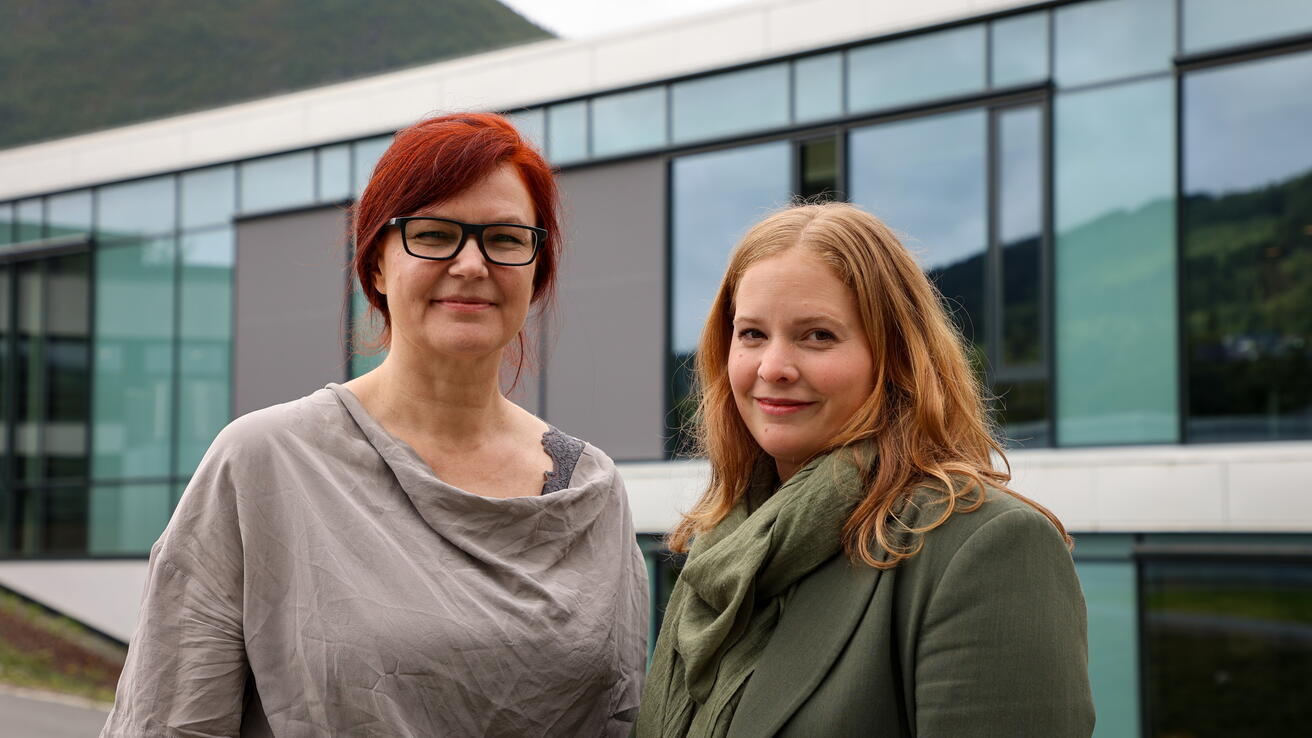
County Library Director Mona Iren Auganæs, together with Synnøve H. Amdam from VUC, initiated the project and can now celebrate the multi-million grant from Erasmus+. Auganæs will be responsible for establishing a network bridging the research and library sectors regarding the use of AI.
"We envision that the project and our network will place libraries across Europe at the forefront as venues where adults can learn about AI in a safe way," says Auganæs.
The Centre for Local Democracy currently under development at HVO is also linked to the project—a connection Professor Bjarte Folkestad believes will generate valuable synergies.
"At the Centre for Local Democracy, we focus on the everyday arenas where we build and maintain our democratic muscles. Libraries play an increasingly important role here as places where people can meet, exchange ideas and become better informed."
In this new collaboration, Folkestad emphasizes the importance of conducting research to determine what actually works.
– We are actually going to measure whether citizens become more engaged in democratic processes, more trusting, and more confident in their ability to participate and make a difference. Many people feel marginalised and unheard. This lies at the very heart of the Local Democracy Centre, making it natural for us to be part of the project.
AI researcher: – A fantastic project!
AI as a field of study and research is growing at VUC, giving the new project a wealth of resources to draw upon. VUC Professor Siv M. Gamlem - who is involved in the national AI centre TRUST, is also looking forward to contributing.
"We have research projects which points to an increased need for skills development in artificial intelligence. It will be important to reach a broader segment of the population than just those currently in education. With the expertise from national AI centers and knowledge from previous research projects, we have a strong foundation to build on."
"AI Trust Libraries" has several goals for the next three years. Among other things, the project aims to establish a certification allowing librarians to become AI facilitators and to create a sustainable research and library network, explains Amdam:
"The network will be named 'CaLibRe,' because we need to constantly calibrate ourselves. AI is evolving rapidly, and libraries must keep pace. We plan to train and certify librarians in this area, but we also envision this expertise being applied everywhere - from schools to nursing homes. Ultimately, it is about fostering a dialogue on what democracy means to all of us."
Gamlem agrees that maintaining a broad perspective is crucial:
"In schools, for instance, there is a significant need to build AI competence among parents as well. We can build connections across many parts of society through this initiative—this is going to be a fantastic project!"